
By Nick J. Buckley for Black Squirrel News
While Europe celebrated the Armistice on Nov. 11, 1918, Floyd Allen ‘Pappy’ Wallace of Battle Creek was under fire on Russian soil, a world away from the war most Americans thought was over.
A sergeant in the U.S. Army’s 339th Infantry, Wallace was fighting at a fortified blockhouse near the village of Tolgus along the Dvina River when a machine-gun bullet shattered his left forearm.
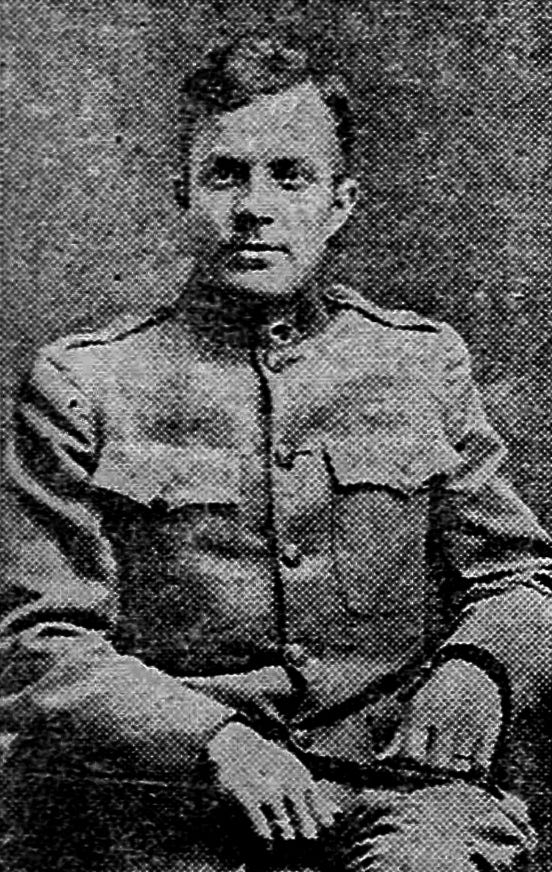
“The Reds were about 500 yards away,” Wallace said in an April 7, 1919, Battle Creek Moon-Journal article. “When a shell threw straw in front of one of our loopholes, I ran out into the fire to clear it myself — and the next time I went out, I was hit.”
Wallace survived. Other Calhoun County soldiers did not.
Their experiences offer a local perspective on the Polar Bear Expedition, a U.S. military intervention in northern Russia during the Russian Civil War.
Decisions made far from home
The Polar Bear Expedition was one of the only instances in U.S. history in which American ground troops fought and were wounded on Russian soil.
In 1918, President Woodrow Wilson authorized American forces to northern Russia as part of a broader Allied intervention. The stated goals were complicated: guard Allied military supplies, support anti-Bolshevik forces and help reopen an eastern front by aiding the Czechoslovak Legion, whose troops were stranded along the Trans-Siberian Railway.
Congress never declared war, and public explanations were limited. The troops landed in a Russia still reeling from revolution: Czar Nicholas II had abdicated in March 1917, and the Bolsheviks overthrew the Provisional Government later that year.
The men who trained at Camp Custer — near Battle Creek in northern Calhoun County — expected to go to France. The 339th Infantry, composed largely of soldiers from Michigan and Wisconsin, had trained for the Western Front. Instead, they were ordered north to Arkhangelsk, Russia.
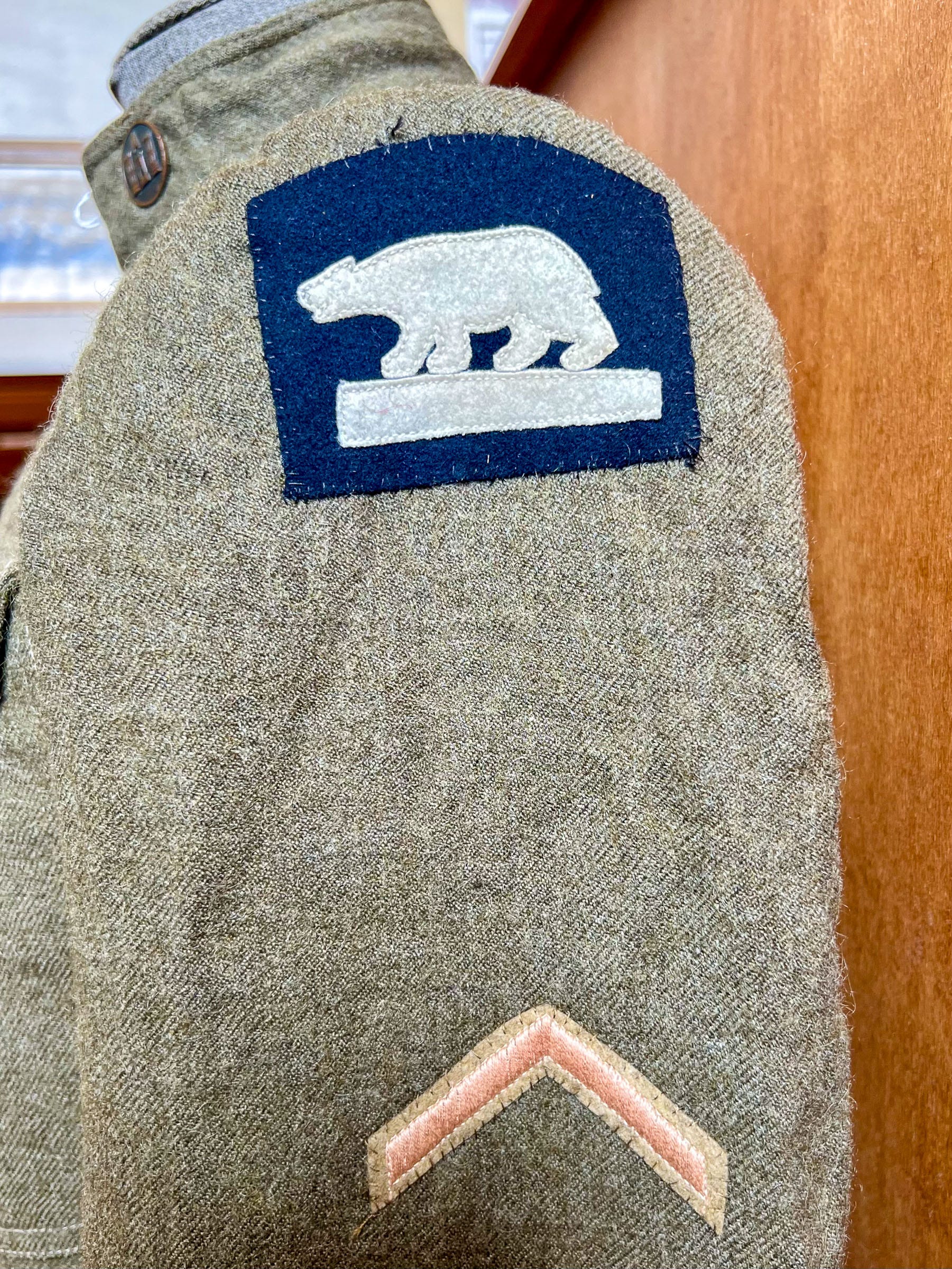
Military planners believed Midwestern troops, raised in harsh winters, would be more resilient in Arctic conditions than soldiers from warmer regions. About 5,000 American soldiers served in northern Russia, earning the nickname “Polar Bears.”
The 339th’s mission was one of two U.S. expeditions sent to Russia; a separate force went to Siberia.
World War I ended. Their war didn’t.
From Camp Custer to Russia’s frozen north
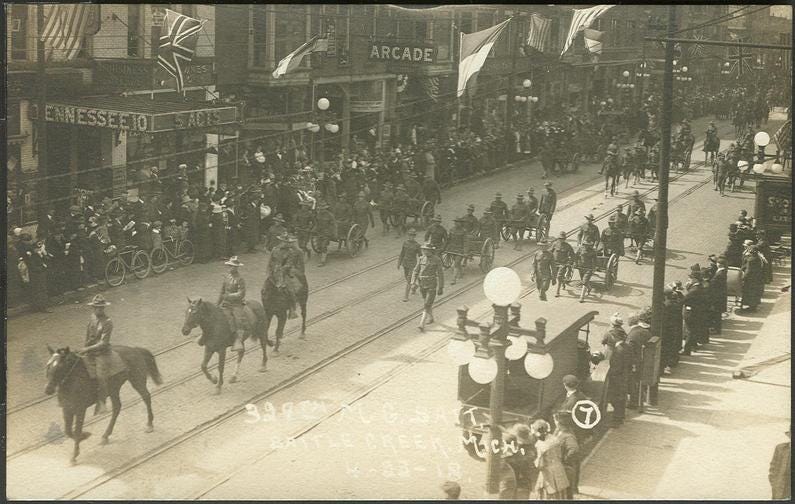
Newspaper inserts such as Trench and Camp, published in the Battle Creek Enquirer and Evening News during 1917–18, tracked the progress of local soldiers. Families gathered to watch companies march, proud of the “doughboys” heading Over There.
Archival photographs show men drilling on frozen fields, rifles slung over heavy coats, unaware they would soon face a very different kind of war than the one they expected.
The journey north was brutal. Soldiers endured overcrowded ships and the rapid spread of the Spanish flu before even reaching the front. Once deployed, temperatures plunged below zero, maps were incomplete, and water-cooled machine guns froze in combat.
Traveling with the expedition were Red Cross nurses who served with the 339th Infantry Regiment in Archangel. Their work placed them alongside soldiers facing combat wounds, disease and harsh winter conditions in northern Russia.
Orville Stocken, a Grand Trunk Railroad machinist who registered for the draft in Battle Creek, died of pneumonia in Archangel, Russia, on Sept. 13, 1918. His death came as the Spanish flu pandemic spread through military camps and units before many soldiers ever saw combat.
Some returned. Some didn’t.
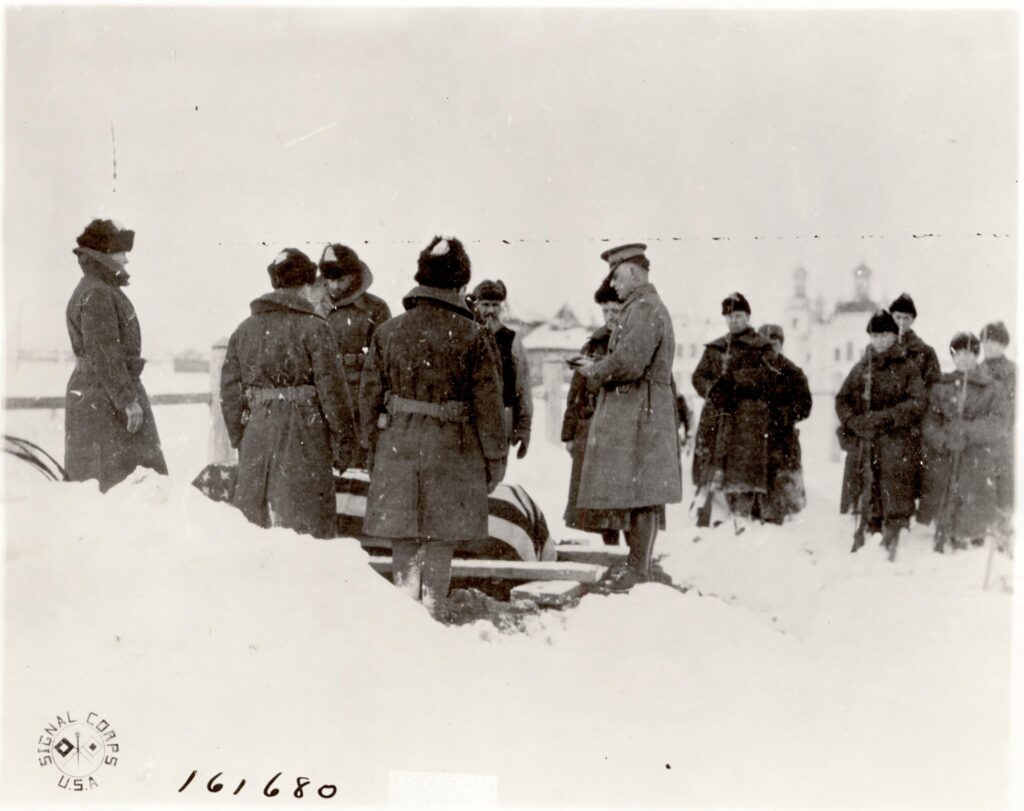


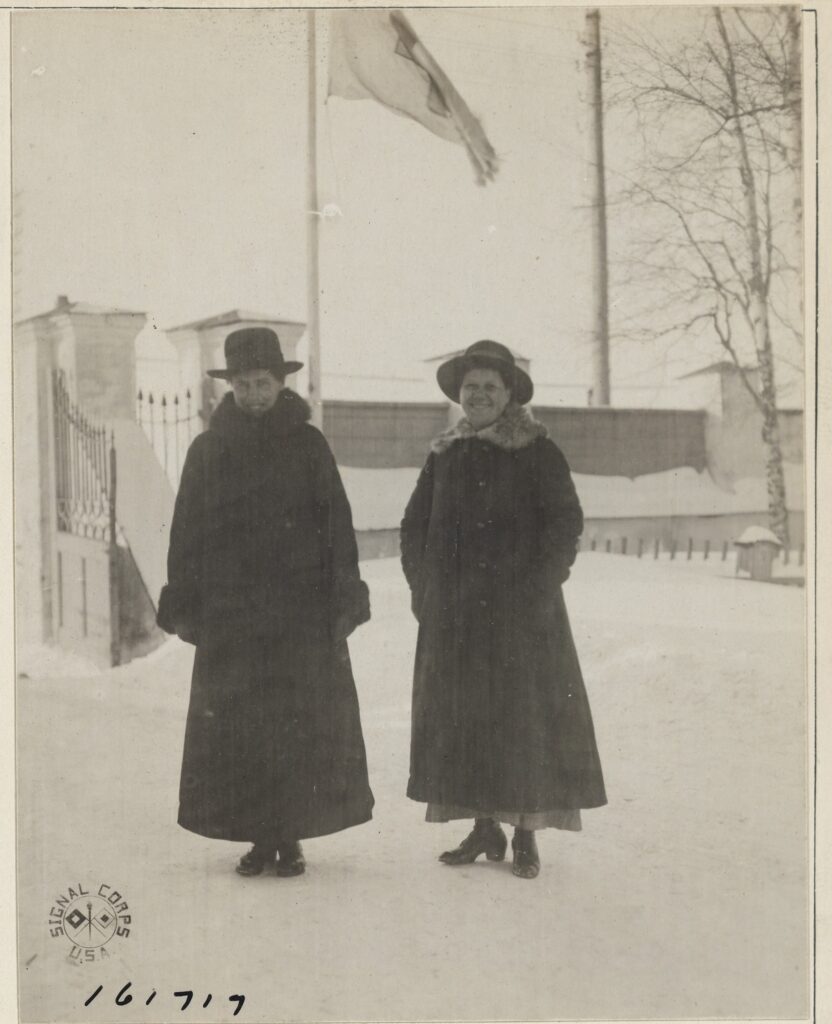


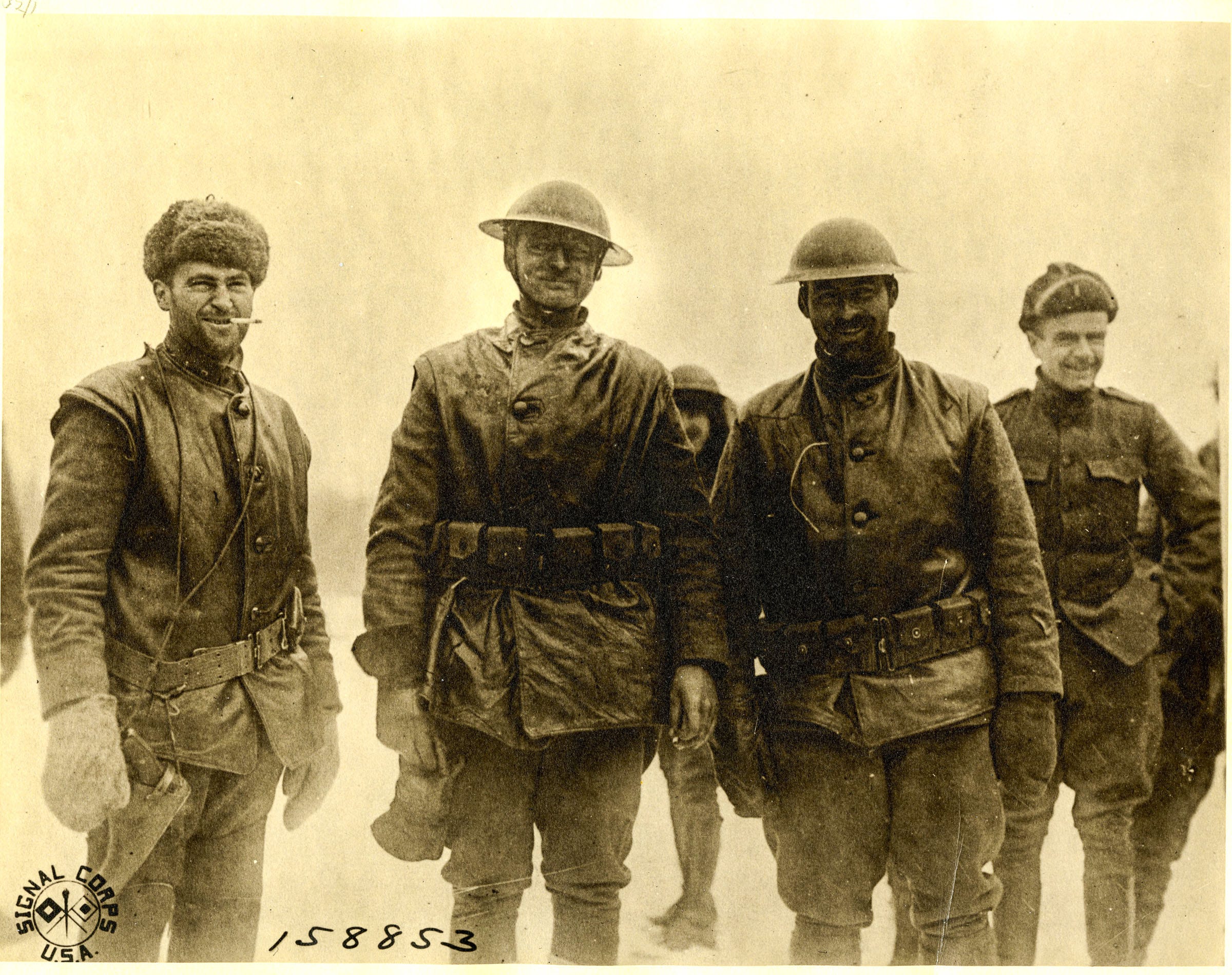
Scenes from Camp Custer and northern Russia during the Polar Bear Expedition, including Camp Custer soldiers, Red Cross nurses, military fortifications and winter conditions during the Allied intervention following World War I. (National Archives; Bentley Historical Library, University of Michigan)
Wallace spent months in hospitals recovering from the machine-gun bullet wound, returning home with limited use of his left arm.
Others never came back.
Of the Americans deployed to northern Russia, more than 500 were killed, wounded or became ill. Among the dead were about 109 killed in action, 35 who died of wounds and roughly 81 died of disease, much of it linked to the spread of Spanish flu.
Even after surviving combat and harsh conditions, soldiers were trapped at the frozen Archangel port for weeks, waiting for ships home.
The aftermath of the expedition reached Calhoun County in different ways. Stocken and William F. Gardner died of disease. Albert Dane “A.D.” Cox left a hospital bed to rejoin his unit in combat and later received the Distinguished Service Cross. Earl J. Brutsche fought at Lake Onega before returning to his family on St. Mary’s Lake.
Home again
Wallace returned to Battle Creek carrying a wound that never fully healed. Doctors surgically repaired his left forearm using a bone graft from his shin. He spent 55 years with Central Electric, serving as a salesman, general manager and company president. He was active in the Lions Club, funding programs for sight conservation and services for the visually impaired.
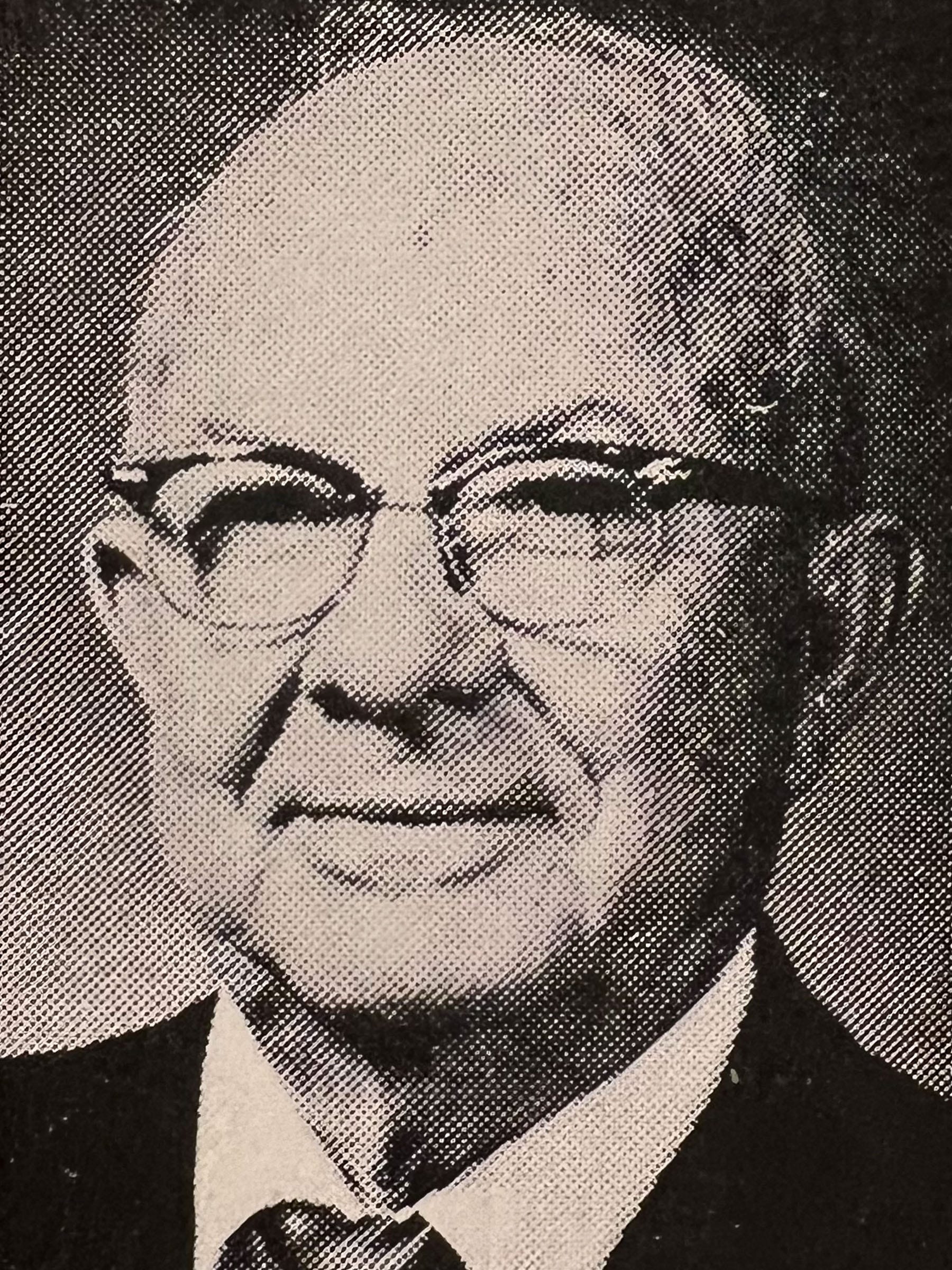
He marched in parades, sold Lions Club newspapers on downtown corners, and raised a family. He rarely spoke publicly about Russia unless asked. Others, like Stocken, never had that chance.
Local newspapers chronicled the Calhoun County Polar Bears over the ensuing decades — their awards, the fallen and reunion gatherings that preserved their memory as public awareness of the expedition faded.
Wallace died in 1982 at age 91. At his funeral, friend Art Fetting said: “How the world needs more Floyd Wallaces… people who are willing to put more into this world than take out … givers … willing to give for the joy of giving.”
Wallace was among the Calhoun County soldiers sent to northern Russia in the final months of World War I, only to keep fighting after the Armistice. Some returned to civic life. Others did not.
Their stories remain part of how Battle Creek and Calhoun County became connected to a conflict far from home — and to history that continued unfolding long after the fighting ended.
How we reported this story
This feature is the result of cross-referencing global military history with local primary records.
- The Historical Society of Battle Creek: Provided original booklets, documents, and an extensive collection of physical newspaper clippings that documented the local “Polar Bear” return and subsequent veteran reunions.
- The Willard Library (Dean Barnum Local History Archive): Digital archives of the Battle Creek Enquirer and News and the Battle Creek Moon-Journal were used to track individual service records and post-war civic involvement.
- The Bentley Historical Library (University of Michigan): Source for the Polar Bear Expedition Digital Collections, including the official diaries and photographs of the 339th Infantry.
- The Fort Custer Historical Society Museum: Contemporary and archival records, newspaper articles, artifacts and exhibits related to the Polar Bear Expedition provided additional historical context.
Additional Resources
- James Carl Nelson: The Polar Bear Expedition: The Heroes of America’s Forgotten Invasion of Russia, 1918–1919 (2018).
- Brenda Glover Leyndyke: Fort Custer in the World Wars, Images of America (2025)
- Fort Custer Historical Society Museum, 2501 26th Street, Augusta. Located on an active military base, appointment and photo ID are required. For more information, visit fortcustermuseum.org.
- Historical Society of Battle Creek Mary Butler Memorial Archive, 307 Jackson St W., Battle Creek. Open Tuesdays and Thursday, 1 to 4 p.m. inside the Battle Creek Regional History Museum.
- Bentley Polar Bear Expedition Digital Collections

Leave a Reply
You must be logged in to post a comment.