
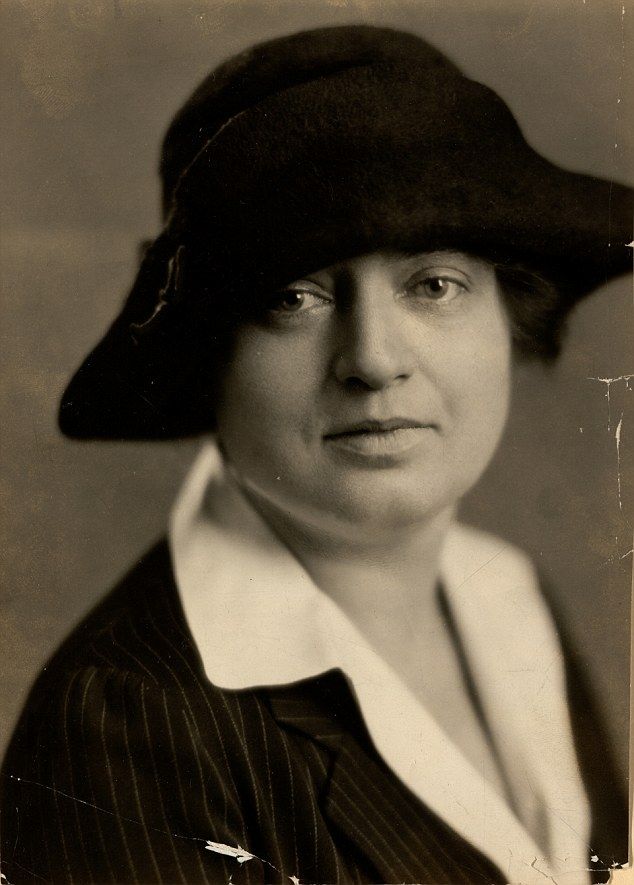
Pioneering journalist got her start in Battle Creek before chronicling the struggles of Americans during the Great Depression.
By Nick J. Buckley / For Black Squirrel News
In 1913, Lorena Hickok was looking for someone interesting.
For $7 a week, the young cub reporter met arriving trains at Battle Creek’s Michigan Central depot, asking passengers questions and hoping someone famous might step off the train.
Battle Creek was already attracting visitors from around the country, including notable guests seeking treatment at Dr. John Harvey Kellogg’s famed Sanitarium.
Hickok hoped to interview some of them. Instead, she mostly encountered ordinary people.
It was a humble start for a woman who would go on to cover some of the biggest stories of her era before traveling Depression-ravaged America to document its toll firsthand.
Today, Hickok is best known for her intimate relationship with first lady Eleanor Roosevelt. But before she became Roosevelt’s companion, she was an ambitious reporter whose career began in Battle Creek.
Finding her footing in Battle Creek
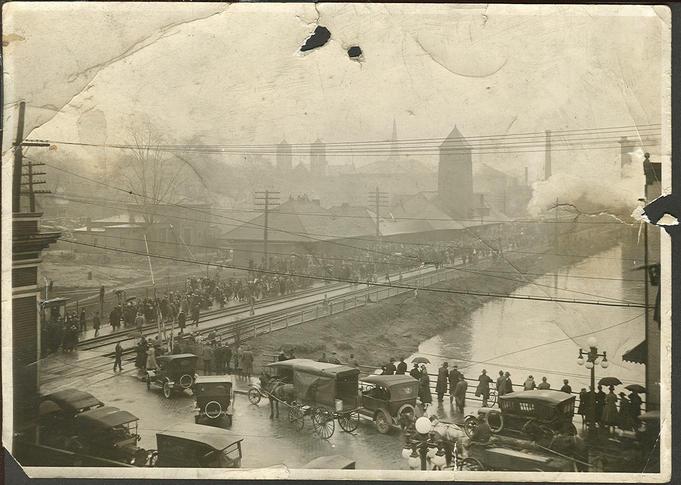
Hickok’s childhood offered little stability. Her family moved frequently around the Midwest. Her mother died when she was 13, and by 14 she left home and began working as a maid.
Hickok eventually settled in Battle Creek, where William and Anna Fish took her into their home so she could attend Battle Creek High School. Friends at school knew her as “Rena.”
At Battle Creek High School, Hickok connected with Alicent Holt, a teacher of Latin, Greek and English who encouraged her love of literature. They read poetry together, and Hickok later called Holt “the most gifted teacher I ever knew.”
Hickok earned mostly A’s, worked on school publications and competed in oratory. In 1912, she won the Hinman Oratorical Contest with “The Cry of the Children,” a speech about child labor.
In a 1979 interview, classmate Leta Browning remembered Hickok as shy, talented and determined.
“She was tall, and some would say a little overweight. She was very mannish and wore tailored clothes. She never went in for fancy clothes, but she dressed very neatly,” Browning said. “She was out to get an education on her own and to be somebody. And that she accomplished for sure.”
Despite her intellect, college proved to be a poor fit for Hickok. She struggled at Lawrence College in Wisconsin and left after a year. Back in Battle Creek, she returned to newspaper work at the Battle Creek Journal, a predecessor of the Battle Creek Enquirer, and began to see a future for herself in journalism.
Making a name for herself
Hickok left Battle Creek in 1915 for the Milwaukee Sentinel. She was hired as a society editor, covering weddings, births and other news traditionally assigned to women.
Hickok wanted to report bigger stories.
Over the next decade, Hickok built a reputation covering politics, sports and other assignments rarely given to female reporters. By 1928, she had joined the Associated Press, where she became one of the wire service’s few female reporters. At a time when most wire stories appeared without a reporter’s name, Hickok earned the coveted right to have her byline appear above her work.
In a letter to fellow reporter Bess Furman, Hickok acknowledged there were easier paths for women in journalism, but that wasn’t what she wanted.
“If you’re built as I am mentally, temperamentally, nervously, or however you want to put it, and you don’t get any kick out of it except the thrill that comes out of working on the news — real, honest-to-gawd stories — then it’s just hell.”
In 1932, Hickok was assigned to one of the biggest stories in the country: the kidnapping of Charles Lindbergh’s 20-month-old son, a case dubbed the “crime of the century.”
Hickok was the AP’s only woman assigned to cover it. She later reflected on how covering the case affected her differently from her male colleagues.
“If you were a woman, your imagination played tricks on you,” Hickok wrote. “You’d wake up out of the sleep of exhaustion thinking you heard a baby crying.”
More than a friendship

During Franklin D. Roosevelt’s 1932 presidential campaign, Hickok was assigned by the Associated Press to cover Eleanor Roosevelt.
At Hickok’s suggestion, Eleanor Roosevelt began holding White House press conferences exclusively for women reporters. The first press conference by a sitting first lady was held March 6, 1933.
That same week, on the day after her husband’s inauguration, Roosevelt wrote to Hickok: “You have grown so much to be a part of my life that it is empty without you.”
Two days later, she wrote: “Oh! I want to put my arms around you. I ache to hold you close.”
As their relationship deepened, Hickok allowed Roosevelt to review stories before submitting them to her editors. On one occasion, she delayed a story at Roosevelt’s request. By June 1933, Hickok had resigned from the AP, recognizing that her closeness with Roosevelt had compromised her ability to report objectively.
The two would exchange thousands of letters over the years, many likewise expressing deep affection. The surviving correspondence points to a romantic relationship, though historians have long debated its exact nature.
Reporting the Great Depression
After leaving the AP, Hickok was hired by Harry Hopkins, head of the Federal Emergency Relief Administration, to travel the country and report on the human toll of the Great Depression.
“I don’t want statistics from you,” Hopkins instructed her. “I don’t want the social-worker angle. I just want your own reaction … and don’t pull your punches.”
Hickok hit the road.
Over the next three years, she traveled across Depression-era America, spanning 32 states and visiting cities, coal towns and farming communities to talk with people struggling to get by.
On a road in Kentucky, Hickok met an older woman known as Aunt Cora. She was barefoot and suffering from pellagra, a disease caused by malnutrition. She carried a paper bag containing a few string beans she had begged from someone. Hickok stopped to talk with her.
As Hickok started to leave, Cora reached out and put a hand on her arm.
“Don’t forget me, honey! Don’t forget me!”
Hickok didn’t.
Her reports went to Hopkins and the Roosevelts, giving them a ground-level view of the Depression from the people living through it. Many were later collected in the 1981 book One-Third of a Nation: Lorena Hickok Reports on the Great Depression.
Hickok and Eleanor Roosevelt remained close for the rest of Roosevelt’s life. In 1979, after both women had died, the release of thousands of their letters brought the intimate nature of their relationship into greater public view.
Their closeness had not gone unnoticed by Franklin Roosevelt. Eleanor later recalled that her husband would tease her about Hickok.
“You’d better watch out for that Hick woman,” Franklin Roosevelt told her. “She’s smart.”
How we reported this: This story draws on contemporary newspaper coverage, historical records and archival materials from the Franklin D. Roosevelt Presidential Library and National Park Service, as well as research from the Mary Butler Archives at the Historical Society of Battle Creek and the Dean O. Barnum Local History Collection at Willard Library.
Additional sources:
- Ishbel Ross’ Ladies of the Press (1936)
- Doris Faber’s The Life of Lorena Hickok: E.R.’s Friend (1980)
- One-Third of a Nation: Lorena Hickok Reports on the Great Depression, edited by Richard Lowitt and Maurine Beasley (1981)
- Sarah Miller’s Hick: The Trailblazing Journalist who Captured Eleanor Roosevelt’s Heart (2025)
About this series: This article is part of Nick J. Buckley’s “How Calhoun County Changed the World.”
For more, read “When Calhoun County’s Polar Bears invaded Russia.”

Leave a Reply
You must be logged in to post a comment.